The story so far is that we’ve identified our broad niche, and I have a ton of content ideas spinning already.
There’s really two things I can do from here:
1 – Start posting like a maniac on social channels
This is never really a bad idea. Just testing what content works is an essential step before we get into building a website or any sort of platform.
2 – Get ready for the first “viral” moment
You need a page, not a website
Honestly this scan be procrastination, but I really think it helps to at least have an email signup ready.
First reason is that I’m an email guy, so I’m always going to say that.
Second reason is that the posts that get signups aren’t always the ones that get impressions and vice versa. I’ve “gone viral” for things that aren’t really related to my niche and it can be pretty useless from a business perspective.
So, I’m not building a “website” on day one, but I want a page to collect email signups.
A quick landing page and we have something to link to from the social profiles of the new venture.
I’ll talk about tech stacks in another post, but here’s the page:
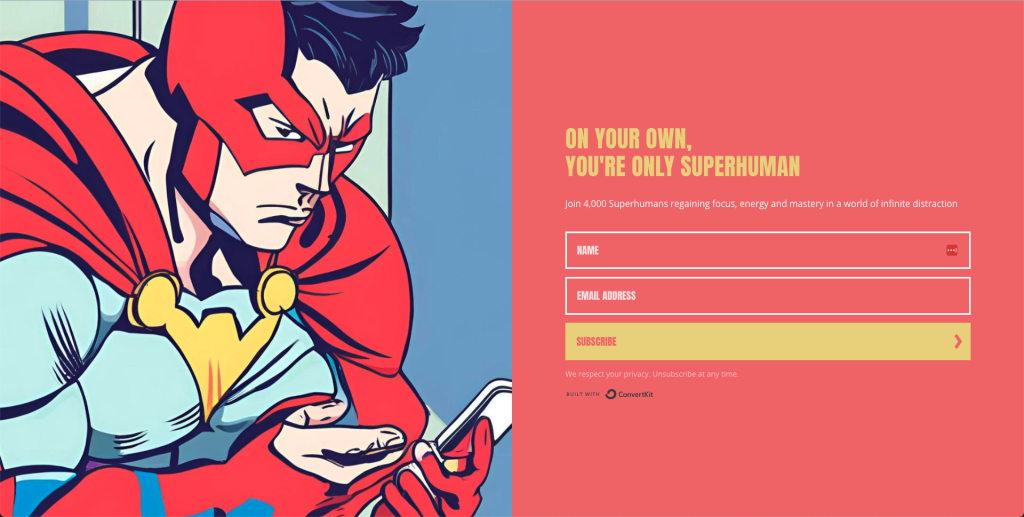
So, with a domain name in place and a landing page for email, this is starting to feel like a “real” project.
Picking platforms by format
The way I look at it, there’s three groups of platforms, based around their skew towards different media:
Text – includes X, LinkedIn, Medium, and Facebook
Images – Instagram, Pinterest
Video – YouTube, TikTok
Now there’s a lot of overlap, but if your ability to create content in one of these formats doesn’t match the platform you’re on, you’re going to struggle.
Start long, then clip.
I tend to work best by creating a long-form text content, like this one, that I can publish on my blog, as an email, on Medium, on LinkedIn and on Facebook.
This usually ends up way longer than needed so I can cull bits of it as the spark of a new idea for later.
I can also pick the best bits out for Tweets and short form videos, either as a yap-to-camera, or faceless voiceover with B-Roll.
It’s the same tactic as podcasters use. Ramble for three hours then pick the best bits out for shorts.
I know one guy running a Facebook agency who gets single digit downloads of his podcast, but millions of views on his clips, and real business enquiries coming off those little bits of social content.
The idea that you start with a tweet, then expand when you get traction is nonsense. The best tweets come as you with argue yourself around an idea, and writing is, for for someone working solo, the best way to do that. If you have a wingman, then bouncing ideas off them is probably better, but I don’t have access to that working style every day.
Work with what you have.
Picking platforms by graph
If you’re early in building your audience, I’m going to put in an unexpected pitch for TikTok, based on how it works.
Most “social” platforms send you content based on your friends and connections and what “people like you” consume. It;s why you get that weird phenmenon of seeing ads after a conversation. It’s because the person you were talking to was browsing those sites, and Facebook knows you’re connected.
Tiktok isn’t really social. The content is the center of the platform and they know that we have a lot of weird tastes that our friends don’t.
Tiktok serves up content to small audience of about 2-300 people. If it gets good reactions, they show it to more. If it starts getting shared, it really takes off.
So, the content, not the audience defines what’s popular. There’s not such a big advantage to be had in a big audience.
It does have a downside though. It’s biased to snappy, entertaining content, not list building, valuable content, but it does work at the top of the funnel. Keep about a 1:5 ratio of entertaining, wide appeal content and save the CTA’s for the high level stuff.
So, here’s the platform plan, in order:
- Long form content in a newsletter on Convertkit.
- Publish this a week or so later on Medium, LinkedIn, Facebook
- Pick the ideas out and make them into short-form clips on TikTok, Instagram, YouTube shorts
- Record the longer content as YouTube videos (Left this until last as it’s the most technically difficult and I want some momentum first)
- Keep tabs on what content drives email signups and start thinking about courses or products around that particular problem/solution
